Top 10 Tips for Taking Your Camper to the Arctic Circle in Winter

Top 10 Tips for Taking Your Camper to the Arctic Circle in Winter
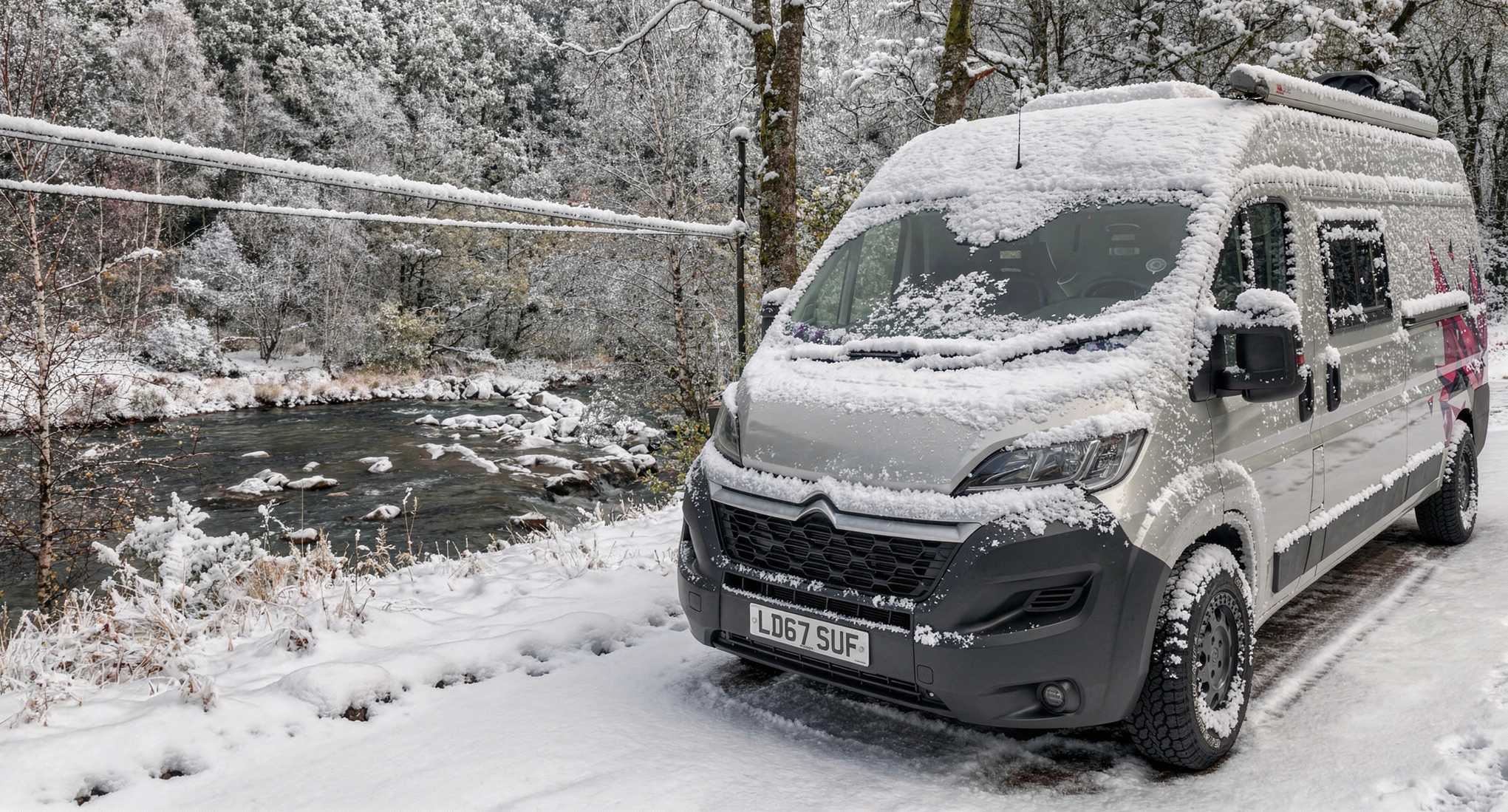
Heading to the Arctic Circle in winter in your camper is a once-in-a-lifetime adventure. Imagine driving through sparkling snowfields, spotting wildlife, and settling in under the Northern Lights. It is exhilarating, unforgettable, and totally achievable if you prepare carefully.
1. Make Your Camper Winter Ready
Insulate your van fully and ensure your main heating system works reliably. Always bring a backup heater for emergencies. Use winter tyres with screw-in studs for extra grip on ice and snow, and carry snow chains as a backup. Carry a shovel to clear snow around your camper or dig yourself out if needed. Screw-in studs are a simple upgrade you can add to your tyres before heading north. These precautions are essential when temperatures can fall to minus twenty, minus thirty, or even minus forty degrees Celsius.
2. Stock Up on Essentials
Bring plenty of food, water, warm clothing, first aid kit, spare fuel, and a shovel. Arctic winters are remote and unpredictable, so carrying extra supplies can make all the difference.
3. Use Arctic Diesel
If your camper runs on diesel, fill up with Arctic diesel rather than standard UK diesel. Arctic diesel is formulated for extreme cold and prevents gelling, ensuring your engine runs reliably in temperatures far below freezing.
4. Service Your Van Before You Leave
Check your battery, engine, and heating systems. Carry a toolkit, jumper cables, extra antifreeze, and a shovel. A well-prepared van reduces the chance of a breakdown in extreme conditions.
5. Plan Your Route and Navigation
GPS and offline maps are essential, but do not rely solely on technology. Mobile coverage can be patchy in remote areas. Carry a compass and paper map as a backup.
6. Know How to Drive in Snow and Ice
Take it slow and steady. Avoid sudden braking or sharp turns, and watch out for black ice. Snowdrifts can appear suddenly, so always stay alert.
7. Choose Safe Camping Spots
Winter camping is quiet and magical, but not all sites are open. Check which campsites operate year round, and always respect local regulations. Wild camping can be incredible if done safely.
8. Enjoy the Snow Activities
From sledging to building snow shelters or going cross country skiing, there is no shortage of Arctic fun. Take time to explore the landscape and enjoy winter activities safely.
9. Watch the Northern Lights
Winter nights are the best time to see the Aurora Borealis. Find a dark spot away from lights, settle in with a warm drink, and enjoy one of nature’s greatest shows.
10. Be Ready for the Unexpected
Weather can change quickly in the Arctic. Snowstorms, icy lakes, or road closures may happen. Stay flexible, plan for delays, and embrace the adventure.
Want more inspiration for your Arctic camper adventure? Read our full Arctic Circle Winter Camper Adventure story
Frequently Asked Questions
1. What is Arctic diesel and why is it important?
Arctic diesel is specially formulated for extreme cold. Unlike standard UK diesel, it has a lower cloud point and is designed to prevent gelling in temperatures as low as minus forty degrees Celsius. Filling your camper with Arctic diesel ensures the engine runs reliably in extreme cold conditions.
2. Do I need screw-in studs for my tyres?
Screw-in studs provide extra grip on ice and snow, making driving safer in Arctic winter conditions. They are a simple upgrade you can add to your winter tyres before heading north. Carry snow chains as a backup for additional safety.
3. Why should I carry a shovel in my camper?
A sturdy shovel is essential for clearing snow around your camper or digging yourself out if you get stuck. In Arctic winter conditions, even a few inches of snow can immobilize a van, so a shovel is a simple but vital safety tool.
5. What other essential items should I bring?
- Plenty of food and water
- Warm clothing, gloves, hats, and blankets
- First aid kit
- Spare fuel
- GPS, offline maps, compass, and paper map
6. Can I camp in the Arctic during winter?
Yes, many Arctic campsites remain open year round. Wild camping is possible too, but always respect local regulations and wildlife. Winter camping is quiet, beautiful, and an unforgettable experience if you are well-prepared.
7. How do I stay safe while driving in snow and ice?
- Drive slowly and steadily
- Avoid sudden braking and sharp turns
- Watch for black ice and snowdrifts
- Use screw-in studs and carry snow chains
- Stay alert and plan your daily route carefully
8. When is the best time to see the Northern Lights?
Winter nights, when the skies are dark and clear, are ideal for viewing the Aurora Borealis. Find a dark spot away from city lights, settle in with a warm drink, and enjoy the show.